Flood and swiftwater emergencies demand more than technical knowledge. They require responders to make decisions, navigate hazards, and execute difficult rescues in conditions that can change by the second.
Purpose-built swiftwater facilities give agencies an opportunity to prepare for those challenges before an emergency begins.
At the North Carolina Emergency Training Center in New London, North Carolina (affectionately known as the Stanly facility), that preparation takes place in a realistic, adaptable environment designed around the situations first responders may encounter in the field.
Designing for Real-World Rescue Scenarios
In collaboration with Boomerang Design, Calibre Engineering led the whitewater design of the Swiftwater Channel and Urban Flood Simulator. Calibre also provided construction oversight for the hydraulic features, carrying the design intent through implementation and operation.
The result is a multi-scenario training environment built around versatility.
The reconfigurable Swiftwater Channel allows obstacles and training conditions to change based on the exercise. Responders can prepare for scenarios including:
- Live-bait rescues
- Bridge extractions
- Vehicle extractions
- Low-head dam recoveries
- Swift-current operations
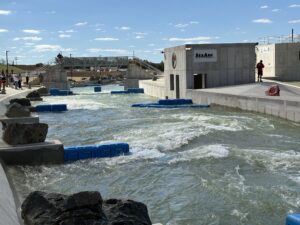
A purpose-built low-head dam feature recreates challenging hydraulic conditions for advanced training.
Preparing for Flooding Where It Happens
Water rescue extends well beyond the river channel. Flooding can turn roads, neighborhoods, structures, and infrastructure into rescue environments.
The facility’s Urban Flood Simulator gives crews a controlled setting to prepare for those situations. Training opportunities include roof and underpass evacuations, search-and-rescue maneuvers, flooded homes, submerged vehicles, multi-vehicle rescues, debris conditions, draining and geysering manholes, and nighttime operations.
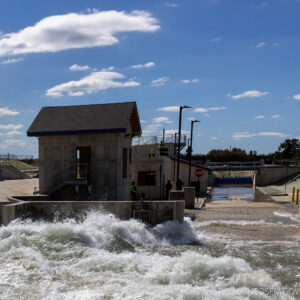
Together, the facility supports vehicle, structure, flatwater, and whitewater training, giving agencies multiple ways to build and reinforce water-rescue skills within the same training campus.
See the facility in operation in the Stanly swiftwater training video.
From Controlled Hydraulics to Better Preparation
For Calibre’s Whitewater Team, designing a swiftwater rescue facility starts with a different question than designing a recreational whitewater environment: What do first responders need to be able to practice here?
At Stanly, that meant creating adaptable hydraulics and realistic hazards around the rescue techniques agencies need to develop.
The value of that investment extends beyond the water itself. A purpose-built facility gives trainers a dedicated environment for exposing responders to difficult scenarios and building experience through repeated practice.
That’s the opportunity Stanly represents for emergency response agencies in North Carolina—and a model for communities looking for new ways to strengthen water-rescue preparedness.
When responders are called into the current, preparation matters. The right training environment helps make that preparation possible.
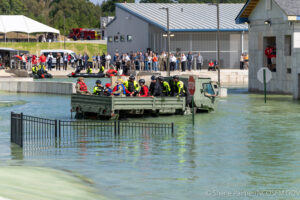
Photo and video credits: Shane Palmer, NCOSFM.GOV; Boomerang Design; Uneektree